COSTAR ARCHITECTURAL Photographers
"stand together with the IBEW"
JOIN YOUR COWORKERS IN BUILDING A STRONGER VOICE ON the JOB WITH IBEW!







For too long, we’ve been beaten down by leadership and continually squeezed to produce more, drive more, start our days earlier, and finish later. For everything we’ve given this corporation, we deserve a seat at the table and a voice to challenge unreasonable work expectations.
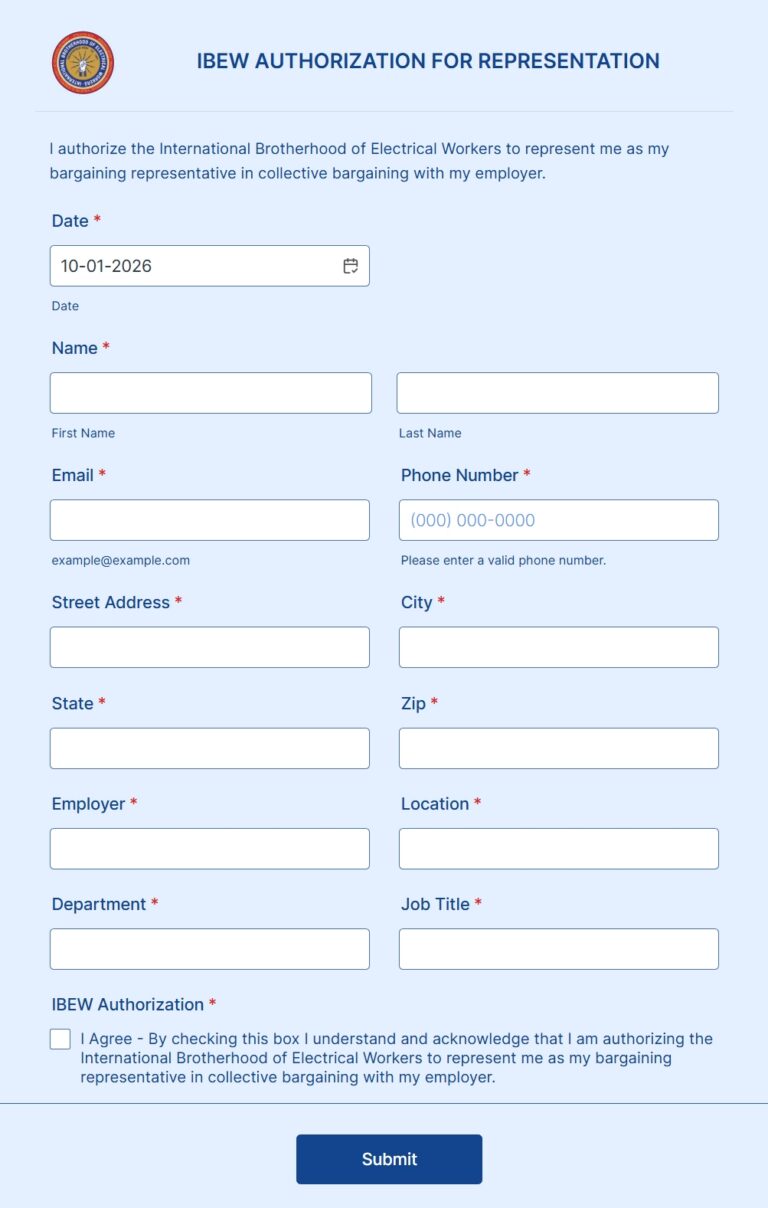
This process is completely anonymous! Filling out the authorization card is simple and a fully anonymous process with zero risk. This organizing effort has been, and will continue to be, a fully 100% anonymous process: we will not meet in public and no one in the organizing effort is known by anyone else. Please contact one of our union reps with any questions.
Leadership immediately responded after learning of our organizing by addressing Point #2 on this list about capturing splats for media shoots and giving us travel time (Point #5). Pressure and organizing WORK! Pressure and organizing WILL NOT STOP until we remove these invasive cameras from our cars that only the American market deals with, and we have a VOICE whenever leadership tries to increase our days and take us away from our families! (see section HOW WOULD A UNION ACTUALLY HELP?)
Now, WHY WE NEED TO STAND UP FOR OURSELVES!:
1) Production expectations went from 0.8/day to 1.0/day. That’s an increase of more than 25% with no change in pay.
✅✅✅ 2) Capturing a splat has been added as a requirement for all media shoots without any proportionate increase in point value (in fact, the point value decreased! Folks, that’s like our taxes going up but government spending going down—that’s robbery and not how our jobs should work). (FIXED BY LEADERSHIP THANKS TO US!) ✅✅✅
3) All media shoots have been reduced by 0.25 points (i.e., Golds from 0.5 to 0.25, Platinums from 1 to 0.75 to 0.5, Diamonds from 1 to 0.75, and Diamond Spotlights from 1.25 to 1) after more work has been added to each assignment (e.g., splats, Matterports, stricter videography expectations).
4) All media shoots require additional photo-assignment photography even if the client doesn’t want those 6-7 images (i.e., Primary, Alternate, Entrance, Lobby, Docks, 90-Degree Lookdown, and Context), thereby increasing the amount of work we have to complete for each media shoot without increased compensation or a proportionate increase in the assignment’s production value.
5) Photo assignments have been reduced from 0.08 points to 0.0556 points despite more images being added to the shot list.
✅✅✅ 6) Travel time has been completely eliminated while still being held to the 1 point per day production requirement. (FIXED BY LEADERSHIP THANKS TO US!) ✅✅✅
7) We’ve suffered many hours of unpaid overtime, especially as a result of the removal of travel time.
8) LoopNet Golds added a Matterport scan.
9) Changes to bonus pay have on average resulted in less payout for photographers.
10) Residential Matterports went from 0.33 points to 0.25 points.
11) Residential Matterports added a splat for each property despite the decrease in point value.
12) We are subjected to continuous recording and monitoring in our cars. This is beyond disgusting and removing all cameras from cars will be one of the first objectives of the union. Corporations, like governments, should not have the right to monitor people around the clock. It’d be one thing to have a dash cam for recording accidents to document for insurance claims, but recording faces and bodies of your staff as they’re driving/working in their cars (effectively their offices) should not be normalized. I don’t want my kids living in this world, and you shouldn’t either.
13) We are expected to be in the field all day, even after completing the required production demands. As a matter of fact, when we were hired, we were sold a hybrid work environment in which we have shooting time and editing time at home, and we had the freedom to plan our work days as we saw fit as long as we met production. I don’t think any of us would have accepted this job if our current work conditions/expectations were anticipated. Now, they are patronizing us in department meetings acting like we asked to be in the field with a camera in our hand for 10 hours, with the new expectation to start our days as early as 6:30am to make it to 8:30am appointments 2 hours away and end our days as late as 7:30pm following distant 3:30pm appointments.
14) Under the (not so) recent management, this department has transformed from an elite creative team into conveyor belt workers with no time to get lunch or use the bathroom on some days.
15) We have been pressured to capture commercial media of people for Homes.com content without their consent.
16) We are expected to fly a drone in unsafe conditions like in temperatures lower than what the drone manufacturer recommends and aspects of our current workflow for capturing media is not compliant/legal (i.e., it violates statutes in Part 107). We shouldn’t continue to overlook these unsafe/illegal requests from our Department leaders who clearly have little regard for the quality of our lives.
INTERESTED IN AN IBEW Representation?
CoStar’s Architectural Photographers capture images and video that help power one of the commercial real estate industry’s leading information platforms (Costar.com) and other major marketplace listing platforms (which include Apartments.com, Loopnet.com, Homes.com, and Ten-x.com). Their work combines technical skill, safety awareness, travel, and detailed knowledge of advanced camera and drone equipment. By joining together with the IBEW, CoStar workers can build a stronger voice on pay, benefits, job security, workloads, travel expectations, safety standards, and the growing use of artificial intelligence in their work.
The IBEW represents more than 100,000 skilled professionals across telecommunications, broadcasting, digital communications, television, radio, motion-picture production, and related industries. This experience gives CoStar’s Architectural Photographers the support of a respected union that understands both technology and professional media work.
All information is strictly confidential and never shared with the employer!
Members Strong
working in the industry

Frequently Asked Questions
HOW WOULD A UNION ACTUALLY HELP?
For the sake of illustrating how a union would improve our lives and workplace, let’s examine one major issue that we’re all intimately familiar with: leadership changing production requirements. Right now, leadership simply announces a new (and unreasonable) change related to production, and we have no option but to comply. They say, “Golds are now worth 0.25 points,” and we have to just nod along with no recourse. We’re forced to adapt (which just means we’re forced to sacrifice more personal time with loved ones, for health, and for leisure), or face the consequence of not meeting production.
With a union, the process flows very differently. When leadership wants to make a change to production, they would be required to meet with the union and negotiate the change. And we (that is, the union on our behalf) would ultimately need to agree to the change. Legally, they will not be able to propose a change without engaging the union. This process involves what’s known as “collective bargaining” where we, APs, are represented by a few APs we’ll elect who themselves will negotiate with leadership on behalf of all of us. Leadership and our union reps will then trade proposals and counterproposals until they come to an agreement (or a formal impasse). Ultimately, this process would stymie leadership’s ability to make our lives significantly worse whenever they feel like we should be working 60 hours per week instead of 50 (and not paying us the extra compensation we’re due for the extra work).
It really is that simple: the union gives us a voice, it gives us an opportunity to say, “no, that’s not reasonable, show us the data on why you think outsourcing editing means we have enough time in the day to complete a Diamond media shoot and a Matterport when Diamonds also recently added a splat and now have more rigorous video expectations after the recent audit change.” Federal labor law gives the bargaining process legal force. If CoStar/leadership unlawfully refuses to bargain in good faith, withholds relevant information, bypasses the union, or makes certain unilateral changes without satisfying its bargaining obligations, the union can file an unfair labor practice charge with the National Labor Relations Board (NLRB).
Would having a union be harmful to the company?
- First, it’s important to again recognize that you and your co-workers are forming this union. Using your union to harm the employer would obviously not be in your best interest and is therefore not something you would do.
- Second, the IBEW is by no means anti-employer. It fully recognizes that employers and employees are co-dependent on each other, and when companies prosper it provides opportunities for workers to prosper too.
- When employees form unions and engage in collective bargaining, they’re doing so to protect their interests and help assure they’re not trampled on as their employers seek to increase profits.
Why employees want to form a union?
There are several reasons workers join or form unions.
- At-Will Employment vs. Working under a Collective Bargaining Agreement (CBA) Absent a contract stating otherwise, employees are presumed to be at-will employees. That is, they’re employed at the will of their employer. Their employer unilaterally sets all the terms and conditions of employment, can change them any time it wants and for any reason it wants. An employee’s only choice is “take-it or leave-it.”
- By contrast, workers who form unions and negotiate a contract with their employer are employed under the terms and conditions of that contract. The employer cannot change the terms and conditions of the contract without the union agreeing to those changes, and is legally bound to honor that contract. The contract between a union and an employer is commonly referred to as the Collective Bargaining Agreement or CBA.
Will the company threaten us during the campaign?
- The union can’t control how the employer behaves so we can’t promise that it won’t violate the law. However, any threats, coercion, or retaliation by the company will result in the union filing Unfair Labor Practice Charges with the National Labor Relations Board.
- You can learn more about your rights under the National Labor Relations Act by visiting the NLRB’s website: nlrb.gov.
- Here are 35 things that employers sometimes do that violate the law. “35 Things The Company Can Not DO Flyer.”
What to expect from management?
- Most employers who learn that their employees are forming a union will bring in their own specialists. They may call themselves union avoidance consultants, or labor relations consultants, but their job is to convince you to remain at-will employees. These well-paid consultants orchestrate and carry out the employer’s campaign against the union.
- The management will likely hold captive audience meetings to talk to employees about unions and how bad it would be if one were to come into this workplace. High-level managers and corporate executives often speak at these meetings too. The meetings are held during the workday, so attendance is mandatory. They often include lunch or a pizza party.
- The goal of the union buster is to create fear and doubt among the employees.
- They’ll ignore the fact that you and your coworkers are forming this union and portray the union as “a third-party of outsiders” coming in to disrupt the great relationship that currently exists.
- They’ll portray the union as a business, saying you’re just customers that the union needs to stay in business. They’ll ask, “Why would want to pay money to a union?
- They’ll admit they may have made some mistakes and weren’t aware that employees weren’t happy. This is followed up with the promise to make things better if you give them one more chance.
- They’ll try to discourage you by saying that organizing will be an act of futility, or that you may end up with less than you have now. (For one, this is an unlawful threat, and two, it’s not true. No contract goes into effect unless it’s voted on and accepted by the workers, and why would you vote to accept a contract that wasn’t beneficial to you?) Click Here for more info on how. “Bargaining does not start from a blank sheet of paper.”
- For more things employers say to dissuade employees from forming unions, click on “12 Dirty Tricks You Should Know About.” Because employers need a majority of the employees to vote against the union, you can expect to be treated with the respect you’ve long deserved. This is by design, as it’s a proven tactic to make employees feel things are better now and maybe we don’t need a union after all. (Hint: It goes away as soon as the threat of forming a union goes away, and things go back to the way they had always been.)
- You should be prepared for lies and false statements made by your employer. The NLRB will not investigate false statements and lies made during an organizing campaign because it feels it’s the workers’ responsibility to distinguish fact from fiction. As such, it is imperative that you do your research and determine for yourself who is telling you the truth and who is lying to you.
What would the union put into our contract?
It’s important to understand that workers don’t hire a union, or bring in a union, they join together with their co-workers to form the union. The reason they do this is because it’s the only means workers have to compel their employer to bargain with them in good faith for a written contract. The IBEW has experienced representatives and negotiators to lead the way, but the issues proposed by the union during negotiations are those the workers themselves bring forward. You’re forming a union to accomplish as a group what you can’t as individuals.
How do employees get the NLRB to hold an election?
- The NLRB requires that employees demonstrate a minimum showing of interest before it will come in and conduct an election. It requires proof that at least 30% of the workforce is interested in collective bargaining.
- As such, the union must first determine what it feels is an appropriate bargaining unit.
- The IBEW then asks employees in this bargaining unit to sign an “Authorization Card.” These cards are used for two purposes. (1.) They show IBEW who supports forming a union. (2) They show the NLRB there’s a sufficient number of interested employees for them to hold an election.
- Can I be fired for signing a card? It is clearly unlawful for an employer to retaliate against anyone for signing a card. Additionally, these cards are treated as strictly confidential by the IBEW and the NLRB. (Unless you tell someone you signed one, no one will ever know.) Cards can be submitted electronically from this website, further assuring confidentiality.
- Can I sign a card and still vote NO? Yes, the cards only get you to an election. It’s the votes cast during that election that determines if the majority supports the union and collective bargaining.
- If enough employees sign authorization cards, IBEW will file a petition with the NLRB that asks them to come in and hold a secret ballot election.
- On this petition, the union lists the employer and location, and a description of the bargaining unit. Not the names of the employees, but a list of classifications to be included, as well as those to be excluded. (Managers, supervisors, and security guards are automatically excluded by law.)
- The employer receives a copy of the petition, but not the authorization cards. They go directly to the NLRB who also won’t reveal who signed them, or even how many employees signed them.
- The NLRB will try to get the union and the employer to mutually agree to the election details and bargaining unit. This happens 90% of the time, and when it does the parties sign a stipulated election agreement outlining the bargaining unit, and when and where the election will be held.
- Sometimes an employer will challenge the make-up of the bargaining unit. (It has the right to make a challenge, but it can’t dictate what it will be.) If the Employer were to challenge the make-up of the petitioned-for unit, the NLRB listens to the arguments from both sides and makes the final determination of who is included and who is excluded, and when and where the election will be held.
- The amount of time between the union filing the petition and the actual election is typically four to six weeks. The process may be delayed if the employer challenges the petitioned-for bargaining unit, and some employers use challenges as a delay tactic.
What would make the Company Negotiate with Us?
-
Workers in the United States have a law that gives them the right to join or form unions if they so choose, and it’s unlawful for an employer to threaten, coerce, or retaliate against any employee who chooses to exercise those rights. It’s called the National Labor Relations Act (NLRA), and it was passed in 1935.
-
Under the NLRA, employees have a right to engage in concerted activities with co-workers for mutual aid and protection. They can discuss workplace issues with each other such as pay rates, benefits, how they’re being treated by management, etc. Any retaliation by an employer against employees because they’re engaging in this type of activity violates federal law.
-
How do we determine if a majority of the workers in our bargaining unit want to form a union and negotiate collectively with the Company for a written contract? The National Labor Relations Board, the federal government agency that oversees this law, comes in and holds a secret ballot election. If the majority of the workers vote YES, the NLRB certifies the union as the workers’ collective bargaining representative. At this point, the employer can no longer make unilateral changes to the current terms and conditions of employment and must maintain the “status quo” while negotiating with the employees for a written contract.
-
If the majority of the workers vote NO, the union is not certified as the employees’ collective bargaining representative and all remain “at-will employees.”
How much would Union Dues be?
- Union dues are voted on by the union’s members and appear in the IBEW’s Constitution and the local union’s By-Laws. Dues to the International Union are voted on by delegates IBEW local unions send to its International Convention held every 5-years. Dues for IBEW local unions are voted on and established by the members of that local and are listed in its By-Laws.
- Further, workers in IBEW organizing campaigns don’t pay any dues whatsoever until the election is won, a first contract has been negotiated, and that contract has been voted on and accepted by a majority of the employees in the bargaining unit.
- The IBEW also waives initiation fees for new members joining the union as a result of an organizing campaign.
What do I do next?
- If you’ve decided that you like the idea of forming a union and bargaining collectively for a written contract, you need to convey this to the union because we won’t proceed until we know there’s enough support to win.
- You show that you’re onboard by submitting an Authorization Card. These cards are not shown to the employer and remain confidential. They are used for two purposes, (1) to show the union how many people support organizing, and (2) they show the NLRB that there’s enough support to come in and hold an election. Authorization Cards can be submitted electronically using the Electronic Authorization Card. If you prefer the more traditional paper card, call or email one of the IBEW Representatives and one will be mailed to you.
- If you’re unsure and want more information, you can contact one of the following IBEW Representatives who can answer your questions. Contact them by phone or email, and your communications will be kept strictly confidential.
How will management feel about a union?
- Some employers respect their employees’ right to choose to form a union and negotiate collectively, or remain at-will employees.
- Some employers prefer this relationship, as it stabilizes the workforce, helps it retain experienced and valuable workers, and helps them to project their labor costs in the coming years.
- That being said, employers prefer the “At-Will” employment relationship because it allows them to call all the shots unilaterally. It allows them to make changes anytime it want or for whatever reason. Having their employees take advantage of the National Labor Relations Act creates an unwanted counter to management’s ultimate power, so you can at least expect the Company to try and persuade you that you are better off being union-free and campaign against the union.
.

Union Authorization Card - What Is It!

Bargaining Does Not Start From Scratch!
35 Things Your Employer Cannot Do
TELECOM & BROADCASTING?
Telecommunications and Broadcasting are closely connected, relying on signal transmission across networks to provide access to information, entertainment, and communication services. The IBEW represents more than 100,000 highly skilled members employed in every aspect of the telecommunications and broadcasting industries. From telephone to broadband and wireless communications systems.
A Workforce Represented By The IBEW Means Having A Voice In Your Healthcare Your Safety Your Hours Your Wages .
Talk to an Organizer about improving your workplace


Organize a Union in your workplace
Knowledge is Key
Every employer, regardless of size or sector, ought to treat employees with respect and dignity, ensuring fair pay, benefits, and healthy working conditions.
Joining IBEW means becoming part of one of the most diverse unions in the United States. Our reach extends beyond electrical industries, encompassing broadcast media, state and federal workers, higher education, manufacturing, green energy sectors, and more.
The International Brotherhood of Electrical Workers is made up of 901,000 active members throughout the United States and Canada. At almost one million members who all work in a variety of skilled professions relating to electricity, the IBEW is one of the largest and most respected labor unions in the world.