By Noah Shachtman

Mr. Shachtman is a contributing editor at Wired. He previously served as the editor in chief of Rolling Stone and The Daily Beast.

One by one, the horses trot up the ramp and onto the track, pulling single-seat chariots behind them. Their drivers, dressed in garish green and bright pink silks, hop into position. Together, they begin to build up speed as they head into the setting sun. The clip-clop of their hooves hitting the track rises to a cacophony. “And they’re off,” the announcer says. The gates swing forward, and the race begins.

Back in the day, when horse racing was the only legal form of gambling in New York State, 20,000 or more people would jam the stands at Yonkers Raceway, cheering wildly as the standardbreds ran their mile-long harness race. But on this day, despite the beautiful July weather, just a few dozen spectators hang around, slumped into faded orange seats along a chain-link fence. Even with online betting, the racetrack takes in less than one-fortieth of what it would have at the sport’s peak. So the horses take their two laps, head back down the runway and exit the track to something near silence.

It’s a lonely time to be a racing fan. For those who own the horses, though, things aren’t so bad. Payouts for winners — the purses — are tremendous, bringing in investors with “both fists full of money,” said Joe Faraldo, the president of the Standardbred Owners Association of New York. Yonkers has purses that are among the largest of any racetrack of its kind, and it still has millions of dollars left over.

If that doesn’t seem to add up, blame a strange and very lucrative arrangement crafted by interests in the horse racing industry (which includes harness racing and its higher-profile sister sport, thoroughbred racing). Back in 2001, when New York State agreed to hand out new licenses to operate slot machines, the racing crowd won an agreement that a chunk of the proceeds would go to them.

At the Yonkers track, the adjacent casino was doing enough business to generate around $600 million during the last fiscal year. About $60 million of it went to pay out those purses, fund the local breeders and dole out a few million for Faraldo’s group. Multiply that by every year and every racetrack, and it’s billions and billions of dollars.

The result is a bizarre inverted pyramid of vice: The state is using one particularly corrosive form of gambling to keep another marginalized form alive.

As misguided as that sounds, it is a surprisingly common arrangement. Maryland uses as much as $91 million a year in slot machine revenue to prop up its horse racing industry. The state last year agreed to acquire the decrepit Pimlico track and invest up to an additional $400 million to upgrade it. Pennsylvania has sunk over $3.5 billion over the past two decades into its racehorse development fund. Even Kentucky, the storied home of American horse racing, relies on a similar machine. Without them, “we would have a few days of racing at Churchill Downs,” Elisabeth Jensen, a former executive at the Kentucky Equine Education Project Foundation, said, “and that would be about it.”

Racing proponents defend that approach, saying the money stimulates a multibillion-dollar equine economy, from the breeders to the trainers to the farmers who grow carrots and hay. Besides, lots of other sports get government subsidies.

t’s true that football and basketball teams get tax incentives, but sports like those have hundreds of millions of fans. The audience for horse racing — except for high-profile events like the Kentucky Derby, which is booming — has plummeted, even as the rise of online gambling has made it easier than ever to place a bet.

Another key distinction: Those other sports don’t routinely kill their athletes. The antiracing advocacy organization Horseracing Wrongs has shown that 11,000 horses have been put to death at American racetracks since 2014. Driven in part by opponents of horse racing and by landmark investigations by The New York Times, a new, federally monitored watchdog has already had a significant impact. Even so, hundreds and hundreds of thoroughbreds still perish each year. In one recent monthlong stretch, 10 thoroughbreds died in New York alone.

As for the jobs that the industry touts, despite recent workplace improvements these workers, many of whom are brought in seasonally from Latin American countries, still in many cases labor seven days a week for minimum wage (when they get it) and sleep in dorms or are jammed into communal apartments. Several told me they had to ride long stretches in the back of a horse trailer with the animals. Over lunch at a Peruvian restaurant near the Belmont track, a half-dozen of these workers told me the racing industry treats its horses with more care than its people. “Mucho más, por cierto,” one said. Much more, for certain. The current political climate is likely to make these workers’ situation more precarious.

Few things are more inspiring than seeing a horse run, and the feelings that these animals evoke in humans can border on the mystic. But that’s neither an economic nor a policy rationale for spending billions on an unpopular sport. So why do it? Why keep propping up a pastime that, despite many attempted overhauls, can’t keep its fans and takes such a heavy toll on its athletes and workers? Our state and local governments struggle to pay teachers what they’re worth, to build affordable housing, to put enough firefighters on a rig.

When the sport was at its peak, the toll it took on horses and workers was measured against the joy it gave millions of fans and the billions it put into states’ coffers. As those fans disappear, however, and the cost to taxpayers grows, that calculus shifts.

With sports betting exploding across the United States, it makes less sense than ever for the public to be coddling this sport like some sort of delicate foundling.

The obvious solution here is also the simplest: Just stop. Let the sport stand on its own and dwindle to whatever size its fan base supports. Instead, state legislatures keep funneling money to it. “The biggest fear that our industry has is that the states are going to stop subsidizing, using slot machines to subsidize the sport,” said Jeff Gural, who owns three harness racing tracks. “Without that, there is no sport.”

Shouldn’t that tell you something?

One hundred and fifty miles due north of Yonkers and seemingly in another world altogether stands Saratoga Race Course. On opening day of the summer meet, you can see all that the sport sees in itself — excitement, prestige and community value. You can also see the kinds of cozy relationships between owners and elected officials that have, for decades running, accompanied such enormous public subsidies.

Sign up for the Opinion Today newsletter  Get expert analysis of the news and a guide to the big ideas shaping the world every weekday morning. Get it sent to your inbox.

More than a million fans a year show up to see Saratoga’s turreted roofs, covered verandas and old-timey jazz quintets. Many of the men are in linen suits; many of the women wear fancy little hats. The local restaurants are packed and hotels are sold out months in advance. “It’s pastoral. It’s historic,” Marc Holliday, chairman of the board of directors for the New York Racing Association, told me that weekend, “and the enjoyment factor is unbelievable.”

Gov. Kathy Hochul, whose husband is a former executive at a conglomerate that owns a New York horse racing track, visited Saratoga just four days into her term, attending the races and a fund-raiser that Mr. Holliday kindly threw on her behalf.

The political connections don’t end there. In the winner’s circle on Opening Day, Terry Finley, the president and chief executive of West Point Thoroughbreds, pointed out to me Barbara Banke, a longtime Republican donor, and mentioned in the next breath that David McCormick, then the G.O.P. Senate candidate in Pennsylvania, would be up soon to raise money for his campaign.

Mr. Finley has helped to pioneer a financial arrangement whereby ownership of a thoroughbred can be divided up into shares as small as $15,000. He calls it “the democratization of our business.” One of the results is that while the sport’s fans are dwindling, a new investor class is multiplying and, with it, a political constituency for racing’s huge subsidies.

James Featherstonhaugh is a constituency unto himself. One of the hardest-nosed lobbyists in Albany (where he’s known as “Feathers”), he owns several horses as well as a chunk of a local harness track. When I mention our location, he launches into song: “They’re off, they’re off, they’re off at Saratoga. You’ll see the finest racing anywhere right there!”


For Families

IBEW Yes! Logo

Unions help workers earn better wages through collective bargaining. That extra income allows families to afford safer housing, healthier food, reliable transportation, and opportunities like college savings or vacations — all of which contribute to a better quality of life at home.

Better Work-Life Balance

Union contracts often include protections for fair scheduling, paid time off, and guaranteed breaks. This gives working parents more time to be present in their families’ lives — whether it’s attending a child’s school play, helping with homework, or just sharing dinner together.

Affordable, Reliable Healthcare

Union-negotiated benefits frequently include comprehensive health coverage for the entire family. That means fewer out-of-pocket medical costs, access to preventive care, and peace of mind knowing children and spouses are protected if health issues arise.

Job Security and Protection from Unfair Treatment

Unions ensure that workers can’t be fired without just cause and have a grievance process if they’re treated unfairly. This job stability helps families plan for the future and shields them from sudden job loss or retaliation, creating a more secure home environment.

Support for Education and Training

The IBEW is committed to providing resources that help families build long-term opportunities, allowing both workers and their children to grow and succeed through education.

Advocacy for Family-Friendly Laws

Unions don’t just negotiate with employers — they also advocate for policies that benefit all working families, like paid family leave, affordable childcare, and public education funding. Their political voice helps shape a society that better supports parents and kids alike.

Higher Wages Mean Greater Financial Stability

Unions foster solidarity and support, not only in the workplace but also in the wider community. From food drives and scholarship funds to helping members in times of crisis, unions create a culture of care that families can rely on in good times and bad.

Rights To Organize

IBEW Yes! Logo

Worker Rights

IBEW Yes! Logo

Forming A Union

IBEW Yes! Logo

For You

Mutual Success and Stability:
Shared Prosperity: A positive and collaborative relationship fosters an environment where the success of the manufacturing company is intertwined with the well-being of its employees. When the company succeeds, it can share the benefits with its workforce through fair compensation, performance bonuses, and other incentives. This creates a sense of shared prosperity, aligning the interests of the employees and the company.

Long-Term Partnership: A stable and cooperative relationship between the company and the union sets the foundation for a long-term partnership. This stability allows both parties to plan for the future with confidence, knowing that they can rely on each other for support and collaboration. Long-term partnerships contribute to the overall sustainability and success of the business.

Adaptability and Resilience: In the face of economic challenges or industry changes, a mutually supportive relationship between the company and the union allows for collective problem-solving and adaptation. Joint efforts in navigating uncertainties can lead to more resilient strategies and solutions that benefit both individual employees and the company as a whole.

Employee Engagement and Commitment: When employees feel that their interests are considered and valued, they are more likely to be engaged and committed to the company’s success. A positive work environment resulting from the collaborative efforts of the company and the union promotes a strong sense of loyalty and dedication among employees, contributing to the overall stability of the workforce.

Open Communication Channels: Mutual success relies on transparent and open communication channels between the company and the union. Regular dialogue allows for the identification of common goals, the resolution of issues, and the continuous improvement of working conditions. Transparent communication builds trust and strengthens the foundation for a relationship based on mutual success and stability.

Competitive Advantage: A manufacturing company that can demonstrate a harmonious and mutually beneficial relationship with its workforce through the union gains a competitive advantage in the market. This positive reputation can attract top talent, enhance customer trust, and appeal to investors who value responsible and collaborative labor practices.

IBEW Yes! Logo

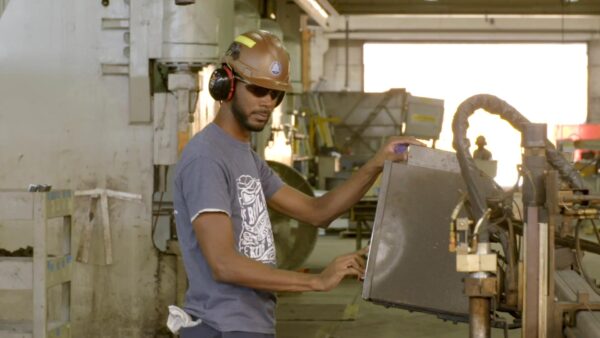
For Manufacturing

Improved Communication:
Open and transparent communication between the company and union fosters trust and understanding. Timely sharing of information reduces misunderstandings, leading to smoother operations and better collaboration.

Enhanced Productivity:
A harmonious relationship encourages a cooperative approach to problem-solving and process improvement. Union workers, when engaged positively, are more likely to contribute to efficiency and productivity gains within the manufacturing processes.

Workforce Stability:
A positive relationship with the union helps in maintaining a stable and motivated workforce. Reduced labor turnover and increased job satisfaction contribute to consistent production levels and lower recruitment costs.

Conflict Resolution:
Effective labor-management collaboration facilitates quicker resolution of disputes and conflicts. Addressing concerns promptly helps maintain a positive work environment, preventing disruptions to production schedules.

Employee Well-being:
A harmonious relationship promotes the well-being of union workers through fair wages, benefits, and working conditions.
This, in turn, enhances employee morale, engagement, and commitment to the company’s success.

Competitive Advantage:
A positive relationship with the union can be a competitive advantage in the marketplace. Demonstrating a commitment to fair labor practices and collaboration with the workforce can enhance the company’s reputation and appeal to customers and investors. A harmonious relationship with union labor, therefore, not only contributes to a positive workplace culture but also brings tangible benefits to the manufacturing company in terms of productivity, stability, and competitiveness.

IBEW Yes! Logo

For Communities

Economic Growth:
Strengthened worker-employer relationships foster a stable and productive workforce. Increased employment opportunities and job security contribute to a more resilient local economy.

Local Prosperity:
Healthy employer-employee partnerships lead to higher wages and improved living standards.
Increased disposable income within the community stimulates local businesses and services.

Social Cohesion:
Positive workplace relationships spill over into the community, promoting a sense of belonging and unity.
Shared values and mutual support create a socially connected and harmonious environment.

Skill Development:
Strong worker-employer collaboration encourages skill development and continuous learning.
A skilled workforce attracts new businesses and industries, further diversifying the local job market.

Innovation and Entrepreneurship:
Supportive employer-employee dynamics encourage innovation and creativity. This atmosphere can lead to the emergence of local entrepreneurs and startups, contributing to community development.

Community Involvement:
Engaged employers and workers are more likely to participate in community initiatives. Volunteerism, community projects, and corporate social responsibility activities strengthen the overall fabric of the community. A strong worker and employer relationship, therefore, has a ripple effect that goes beyond the workplace, positively impacting the community at large.

IBEW Yes! Logo

For Workers

Fair and Competitive Compensation:
The union can negotiate fair wages and benefits for individual employees, ensuring that they receive competitive compensation within the industry.
This fosters job satisfaction and loyalty, contributing to a stable and motivated workforce.

Improved Working Conditions:
The union can advocate for improved working conditions, including safety measures and health benefits.  Better working conditions not only enhance the individual employee’s well-being but also contribute to a healthier and more productive work environment.

Job Security:
Through negotiations and collective bargaining, the union can work to secure job protection measures.
Increased job security provides peace of mind for individual employees and promotes a stable workforce for the company.

Professional Development Opportunities:
Collaborative efforts between the company and the union can lead to the establishment of training and development programs. These programs benefit individual employees by enhancing their skills and employability while supporting the company’s need for a skilled workforce.

Employee Representation:
The union serves as a representative for individual employees, ensuring their voices are heard in decision-making processes. This empowerment contributes to a positive workplace culture and helps the company address employee concerns proactively.

IBEW Yes! Logo
An icon featuring a blue stethoscope and a heart with a heartbeat line inside a blue circle with a white background.

Great Healthcare

Union workers enjoy comprehensive and affordable family healthcare. The IBEW negotiates strong health benefits, so workers can access the care they need  without worrying about the costs.

IBEW Yes! Logo
An icon featuring a blue piggy bank with a dollar bill being inserted into the top, all within a blue circle with a white background.

Retirement Security

Union workers enjoy stronger retirement security than their nonunion counterparts. In fact, nearly 100% of union members have retirement benefits through their job.

IBEW Yes! Logo
A placeholder image with the text "There was an error processing this image" on a gray background.

opportunity to thrive

The IBEW takes pride in being the best-trained  workforce around, and we are committed to ensuring that all our members have the chance to grow professionally. The IBEW offers the most comprehensive training in the entire electrical industry, which means more career opportunities for you.

IBEW Yes! Logo
An icon featuring a blue money bag with a dollar sign on it, all within a blue circle with a white background.

better wages

Union members make more money. On average, union workers make nearly 20% more than nonunion workers according to the Bureau of Labor Statistics. That’s because a union contract gives workers the power to make sure they are paid their fair share.

IBEW Yes! Logo
An icon featuring a blue megaphone with sound waves emanating from it, all within a blue circle with a white background.

a voice at work

When workers come together as one, they gain a voice at work, with a say in wages, benefits, and  work rules. Without a union, everything from your paycheck to scheduling is at the whim of  management. But collective bargaining gives you power.

IBEW Yes! Logo