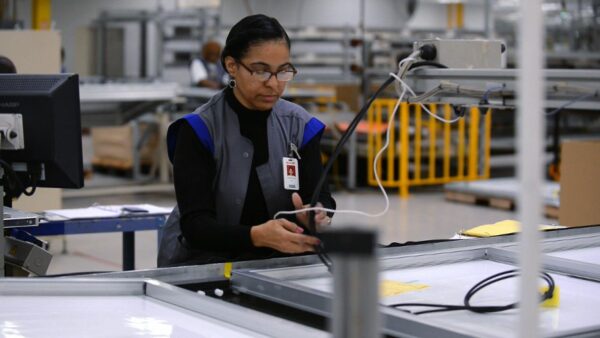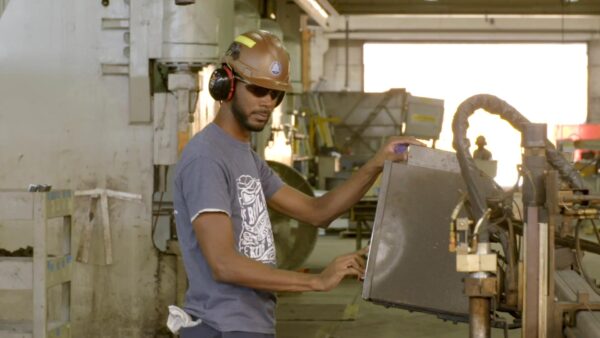
NCR Customer Engineers Are Skilled Professionals — And It’s Time We Had a Voice.
Customer Engineers keep NCR’s service and uptime running every day. A union gives us the power to negotiate fair standards, job security, and real respect for our work.






ABOUT THE IBEW
The International Brotherhood of Electrical Workers (IBEW) represents tens of thousands of technical field service and equipment maintenance workers across the U.S. and Canada — including technicians who install, repair, configure, and support mission-critical systems in banking, utilities, telecom, manufacturing, and public infrastructure.
NCR Customer Engineers already perform that level of skilled work. We keep NCR running by driving to customer sites, repairing equipment, restoring service, meeting strict SLAs, and protecting client uptime. Yet almost every rule that affects our jobs — scheduling, overtime, discipline, performance ratings, and availability — is set from the top with no input from the people doing the work.
Forming a union means Customer Engineers negotiate the terms of our work rather than having them dictated to us. When the workers who carry the service have a voice, our time, our families, and our future are taken seriously.
Members Strong
working in the industry
Pay that reflects the skill and responsibility of field technical work
Raises and wage progression defined in a contract, not just “at management’s discretion”
Premiums for nights, weekends, holidays, and emergency calls
Overtime rules that benefit the worker — not just the company
Transparency in pay scales instead of individual guessing
Union standards that keep wages moving forward, not frozen by corporate budgets
A real voice in how the work is structured — not policies handed down from above
Just-cause protection instead of at-will termination
Fair evaluation standards that don’t weaponize metrics
Scheduling and availability rules that recognize family time
Recognition for the essential work CEs do restoring uptime for customers
A grievance system that actually defends workers when something isn’t right
- Retirement plans that protect workers long-term, not just shareholders
Paid leave that’s not controlled by “operational needs”
Negotiated holidays and PTO instead of “approval dependent”
Frequently Asked Questions
How NCR Workers Organize with IBEW
Can workers in Canada form a union?
Yes. Section 2(d) of the Canadian Charter of Rights and Freedoms guarantees every individual the fundamental freedom of association, which includes the right to join and participate in a union of their choice without interference, coercion, or intimidation.
Would having a union be harmful to the company?
- First, it’s important to again recognize that you and your co-workers are forming this union. Using your union to harm the employer would obviously not be in your best interest. A Union agreement should be there to make your workplace better for you and your coworkers.
- Second, the IBEW is by no means anti-employer. We fully recognize that employers and employees are co-dependent on each other, and when companies prosper, it provides opportunities for workers to prosper too.
- When employees form unions and engage in collective bargaining, they are doing so to protect their interests and help assure they are not trampled on as their employers seek to increase profits.
Why employees want to form a union?
- At-Will Employment vs. Working under a Collective Bargaining Agreement (CBA) Absent a contract stating otherwise, employees are presumed to be at-will employees. That means that they are employed at the will of their employer. This means that their employer unilaterally sets all the terms and conditions of employment, the employer can change them at any time it wants and for any reason it wants. An employee’s only choice is “take-it or leave-it.”
- By contrast, workers who form unions and negotiate a contract with their employer are employed under the terms and conditions of that contract. The employer cannot change the terms and conditions of the contract without the union agreeing to those changes and is legally bound to honour that contract. The contract between a union and an employer is commonly referred to as the Collective Bargaining Agreement or CBA
Will the company threaten us during the campaign?
- The union can’t control how your employer behaves or reacts to workers who want to form a union in the workplace, so we can’t promise that they won’t threaten workers or won’t violate the law. However, any threats, coercion, or retaliation by the company can result in the union filing an Unfair Labour Practice Charges with the appropriate provincial or federal labour boards to protect the worker(s).
- You can learn more about your rights under the appropriate provincial labour board or through the Canada Industrial Relations Board (CIRB) for those workers that are employed in federally regulated industries.
- Here are 35 things that employers sometimes do that violate the law. “35 Things The Company Can Not DO Flyer.”
What to expect from management?
- The management will likely hold captive audience meetings to talk to employees about unions and how bad it would be if one were to come into this workplace. High-level managers and corporate executives often speak at these meetings too. The meetings are held during the workday, so attendance is mandatory. They often include lunch or a pizza party to try and convince workers there is no need to unionize.
- They’ll ignore the fact that you and your coworkers are forming this union and portray the union as “a third-party of outsiders” coming in to disrupt the great relationship that currently exists.
- They’ll portray the union as a business, saying you’re just customers that the union needs to stay in business. They’ll ask, “Why would you want to pay money to a union?
- They’ll admit they may have made some mistakes and weren’t aware that employees weren’t happy. This is often followed up with the promise to make things better if you give them one more chance.
- They’ll try to discourage you by saying that organizing will be an act of futility, or that you may end up with less than you have now. (For one, this is an unlawful threat, and two, it’s not true. No contract goes into effect unless it’s voted on and accepted by the workers, and why would you vote to accept a contract that wasn’t beneficial to you?
- For more things employers say to dissuade employees from forming unions, click on “12 Dirty Tricks You Should Know About.” Because employers need a majority of the employees to vote against the union, you can expect to be treated with the respect you’ve long deserved. This is by design, as it’s a proven tactic to make employees feel things are better now and maybe we don’t need a union after all. (Hint: It goes away as soon as the threat of forming a union goes away, and things go back to the way they had always been, or could even get worse.)
How will management feel about a union?
- Some employers respect their employees’ right to choose whether to join a union and bargain collectively, or to continue working under individual employment arrangements. Many employers value this relationship because unionized workplaces often experience greater stability, higher retention of skilled and experienced workers, and more predictable labour costs over the long term.
- That said, some employers prefer to remain non‑union because it allows them to maintain full control over workplace decisions. Without a collective agreement, employers can make changes to wages, schedules, or policies with fewer restrictions, provided they meet the minimum requirements of provincial or federal employment standards.
- When workers choose to exercise their rights under Canadian labour laws—whether through the Canada Labour Code or provincial labour relations legislation—it introduces a form of shared decision making that some employers may not welcome. As a result, you can expect the employer to try to convince you that you are better off without a union and to campaign against unionization efforts.
- There are also several examples of employers who at first were upset/against the union drive, and have later welcomed the change. This could be because the collective agreement clearly lays out the terms and working conditions, better voice of workers in the workplace often lead to better changes in the workplace, in health and safety (which can impact the employer’s workplace insurance premiums), and in some instances can even mean a greater market for the employer to tap into because they are unionized.
What would the union put into our contract?
1. It’s important to understand that workers don’t hire a union, or bring in a union, they join together with their co-workers to form the union. The reason they do this is because it’s the only means workers have to compel their employer to bargain with them in good faith for a written contract.
2. The IBEW has experienced representatives and negotiators to lead the way, but the issues proposed by the union during negotiations are those the workers themselves bring forward. You are forming a union to accomplish as a group what you can’t do as individuals.
3. There are strength in numbers and that’s the union advantage. The IBEW and our Representatives will be there with you and your coworkers every step of the way, but it is ultimately the workers who choose what they want to see in a contract and then eventually bring a tentative agreement back to the workers (members in the workplace) to vote in favour or against the tentative agreement.
How do employees get the appropriate Labour boards to hold a vote?
When employees want to form a union, they begin by showing support through signed union support or membership cards. Once enough employees sign these cards, the appropriate labour board will either trigger a vote or, in some cases, automatically certify the union.
Each jurisdiction has its own set of rules for unionizing a workplace. For the rules in your province, please reach out to us using the contact form on this page and we will be more than happy to answer your questions.
What would make the Company Negotiate with Us?
- In Canada, employers negotiate with unions because labour laws require them to do so once a union is certified to represent workers. These laws obligate both sides to bargain in good faith, meaning they must meet, exchange information, and make reasonable efforts to reach a collective agreement.
- Beyond legal requirements, companies negotiate because it helps avoid strikes, lockouts, and business disruptions. Negotiated agreements also create predictable rules around wages, scheduling, benefits, and workplace processes, which can stabilize operations and reduce HR conflicts, which are positive news for many employers.
- Maintaining good labour relations supports employee morale and retention, and it helps protect the employer’s public reputation—especially important in sectors with strong community visibility. For many organizations, cooperative bargaining ultimately leads to smoother operations, fewer disputes, and a more productive, stable workforce.
How much would Union Dues be?
1. Union dues are voted on by the union’s members and appear in the IBEW’s Constitution and the local union’s By-Laws. Dues to the International Union are voted on by delegates elected by members of their IBEW local unions who are sent to the International Convention which is held every 5 years. Dues for IBEW local unions are voted on and established by the members of that local union and are listed in its By-Laws. International Union dues are the same across the country, while ocal Union dues vary based on what members decide that the local union needs in order to operate. Further, workers in IBEW organizing campaigns don’t pay ANY dues whatsoever until the election is won, a first contract has been negotiated, and that contract has been voted on and accepted by a majority of the employees in the bargaining unit.
2. The IBEW also waives initiation fees for new members joining the union as a result of an organizing campaign.
What do I do Next?
- If you have decided that you like the idea of forming a union and bargaining collectively for a written contract in your workplace, you need to convey this to the union because we won’t proceed until we know there’s enough support among your coworkers to win the unionizing campaign.
- You show that you’re on board by submitting an Authorization or support Card. These cards are not shown to the employer and remain strictly confidential. They are used for two purposes, (1) to show the union how many people in the workplace support organizing, and (2) they show the appropriate labour board that there’s enough support to come in and hold a vote. Authorization Cards can be submitted electronically. Or by the more traditional method of a paper card.
- If you’re unsure and want more information, please fill out the contact form and an IBEW representative will contact you and can answer your questions.
A Workforce Represented By The IBEW Means Having A Voice In Your Healthcare Your Safety Your Hours Your Wages .
Organize a Union in your workplace
Knowledge is Key
Every employer, regardless of size or sector, ought to treat employees with respect and dignity, ensuring fair pay, benefits, and healthy working conditions.
The Telecommunications Department represents 50,000 IBEW professionals in broadband, fiber, telephone, satellite and cable television and wireless systems. Since the earliest days of the telephone, the IBEW has represented workers in this important industry, from the first union of telephone operators in 1897 to cutting-edge fiber optic and wireless technicians today.
The International Brotherhood of Electrical Workers is made up of 873,000 active members throughout the United States and Canada. At almost one million members who all work in a variety of skilled professions relating to electricity, the IBEW is one of the largest and most respected labor unions in the world.